How to Spot a Potentially Dangerous Tree
A tree becomes a hazard when a structural defect combines with something it could damage. A mature tree may have a lean or hollow area and still stand for years, while a similar defect near a home, driveway, power line, or play area may require prompt action.
In this blog, our experienced Charleston tree service team explains warning signs you can observe from the ground and when to call for a professional hazard assessment before severe weather arrives.
Check the Trunk
Walk around the tree and look for fresh cracks, open seams, cavities, bulges, or fungal growth. Splits and cracks can weaken the trunk or major limbs, while fungi around the trunk base may be associated with internal decay. Do not probe cavities, climb the tree, or cut into damaged areas yourself.
Look for a New Lean or Root Movement
A longstanding lean is different from a lean that appeared or worsened after a storm, construction activity, or saturated soil. Warning signs include raised or cracked soil on one side of the tree, exposed roots, a gap at the trunk base, or ground movement opposite the direction of the lean. Root-plate heaving can indicate reduced anchoring and should be treated as urgent.
Inspect the Canopy
Large dead branches, hanging limbs, broken leaders, and narrow V-shaped unions between major stems can increase failure risk. Broken or hung-up limbs are particularly dangerous because they may fall without warning. Keep people away from the area and arrange professional removal rather than trying to dislodge them.
Consider the Target Zone
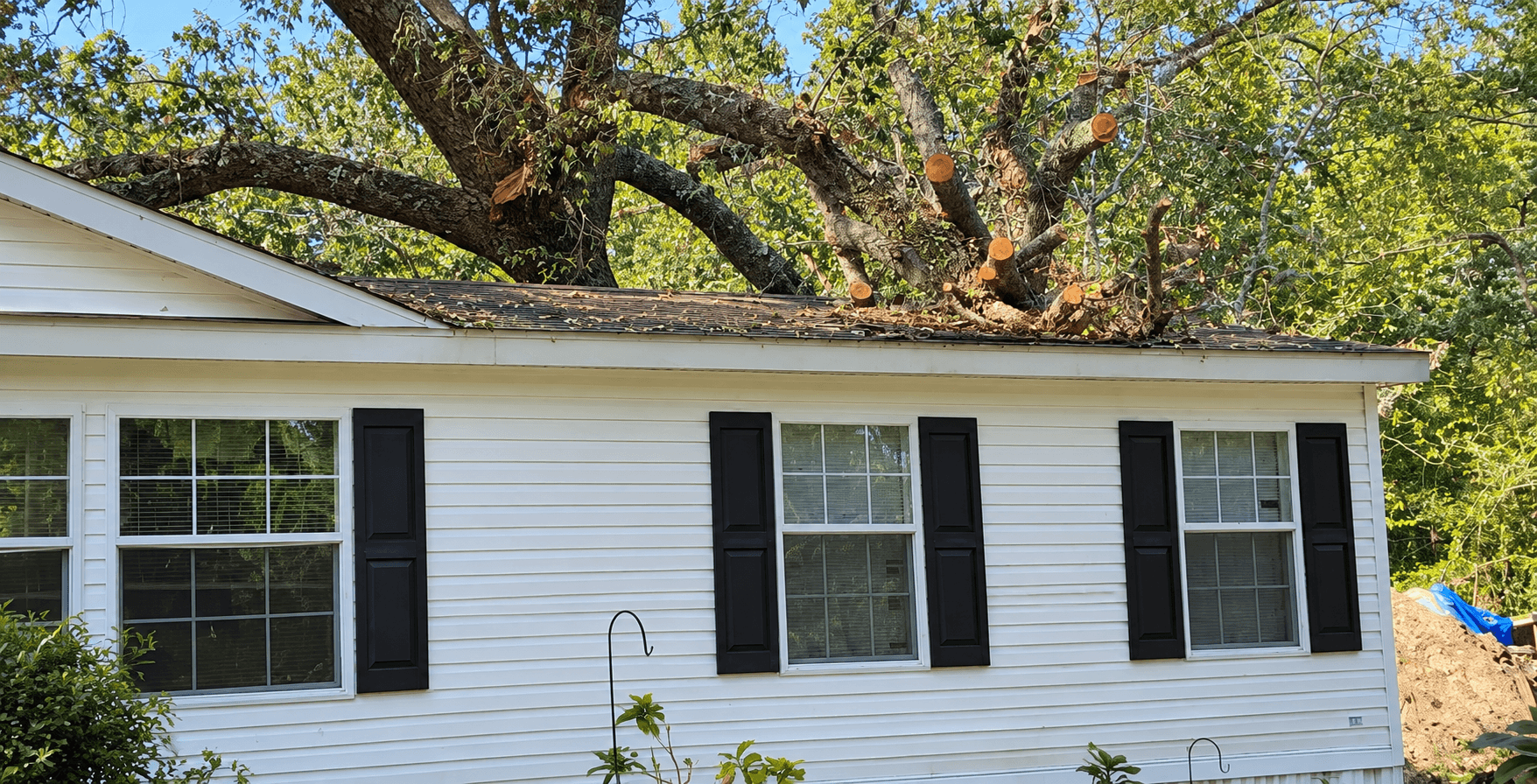
A defect matters more when the potential fall zone includes a house, roofline, cars, service lines, fences, pools, walkways, or areas where people gather. Make note of what is beneath the canopy and where the tree leans. This helps a tree professional evaluate risk and plan the work.
What to Do Before a Storm
Inspect your property periodically and after major weather events. Photograph trees that concern you so changes in canopy density or lean are easier to notice. Schedule preventive pruning for deadwood and structural issues before a storm is approaching.
Never work near overhead power lines. Dominion Energy advises that only qualified utility line-clearance contractors may work within 10 feet of power lines or on trees with branches within that distance. Contact the utility and a qualified professional if a tree threatens lines.
Add Your Heading Text Here
No. A professional should distinguish a natural, stable lean from recent movement or root failure.
Proper pruning may remove deadwood and reduce problematic branch weight. Topping or excessive thinning can harm a tree and create future problems.
Stay clear, keep others away, and contact the utility. Do not touch the tree or attempt trimming.
Carolina Tree Service can evaluate hazard trees and recommend pruning, removal, or monitoring.