Trees add shade, character, and natural beauty to a property, so tree removal should never be the automatic answer. Sometimes pruning or ongoing tree care can preserve a tree for years. In other cases, severe damage or declining structural integrity means leaving it in place creates an unacceptable safety risk. A professional tree inspection is the safest way to determine whether the tree can be treated, pruned, monitored, or removed.
In this blog, the experienced team at Carolina Tree Service will explore some of the most common warning signs that a tree may no longer be safe to keep, what those signs actually mean, and when it is time to call a professional for a closer look.
1. The Tree Has Developed a New Lean
Some trees grow at an angle and remain structurally sound. A new lean is different. Look for cracked or raised soil near the base of the tree, exposed roots on one side, or a trunk that shifted after wet weather or a storm. Those signs may mean the root plate is moving.
A leaning tree deserves immediate attention when it points toward a house, driveway, play area, or power lines. Do not stand beneath it or try to pull it upright. An arborist or experienced tree expert can examine the roots, trunk, soil, and surrounding targets before recommending tree removal.
2. The Trunk Shows Major Decay or Structural Damage
Vertical cracks, a hollow trunk, large cavities, and sections of missing bark can indicate internal decay. Mushrooms growing around the base of the tree may also be associated with decaying wood or roots. A tree can remain green while its load-bearing structure weakens, so leaves alone do not tell the whole story.
Multiple trunks can create another major concern when they meet in a tight V-shaped union. Included bark, and old cracks can reduce the strength of that connection. If one side begins separating, large branches or an entire stem may fall.
3. The Root System Has Been Damaged
Roots provide water, nutrients, and anchorage. Trenching, driveway installation, construction, soil compaction, flooding, and heavy machinery can all damage them. The effect may not show up in the canopy for months or years.
Warning signs include severed roots, soil heaving, sparse leaves, dead branch tips, and decline concentrated on one side. Root damage does not always mean you must remove a tree, but extensive loss can make it unstable. The tree’s species, size, health, and distance from structures all affect the decision.
4. Large Portions of the Canopy Are Dead
One dead branch can often be handled with proper pruning. Many dead branches throughout the crown may point to disease, root loss, drought stress, or advanced decline. Dead branch stubs and brittle limbs create a safety hazard because they can fall in ordinary wind, not only during severe weather.
Compare the tree with nearby trees of the same species. If it leafs out much later, has unusually thin foliage, or continues losing large branches, schedule a tree inspection. A severely stressed or dying tree may not recover enough to justify the risk of keeping it.
5. Disease or Pests Have Caused Severe Damage
Fungal growth, oozing wounds, peeling bark, galleries, and fine sawdust can signal disease or insect activity. Some problems are treatable; others cause internal decay that cannot be reversed. Epicormic shoots—clusters of weak sprouts along the trunk or large limbs—can be a stress response and should be evaluated along with other symptoms.
Correct identification matters. Removing the wrong branch or applying an unnecessary treatment can make matters worse. A qualified professional can assess the whole tree rather than relying on a single symptom.
6. Storm Damage Has Compromised the Tree
A tree that lost a small limb may only need cleanup and corrective pruning. A split trunk, uprooted root plate, broken main leader, or canopy reduced beyond recovery is a different situation. Storm damage near a roof or power lines requires extra caution because tensioned branches can move unexpectedly.
After a storm, keep people away and view the tree from a safe location. Do not climb a damaged tree or use a chainsaw on suspended wood. Tree work involving large trees, fallen limbs, or nearby structures requires planning, rigging, and the right equipment.
7. The Tree’s Location Creates an Unmanageable Hazard
Healthy trees growing close to structures do not always need removal. The real question is whether clearance, roots, species, condition, and available pruning options can be managed safely. A tree repeatedly dropping large limbs on a roof, damaging a foundation, or interfering with essential utilities may have reached the point where removal is the practical choice.
Charleston also has rules for protected trees and grand trees. Permit requirements can depend on location, tree species, and trunk size. Before removing a regulated tree, verify the applicable local requirements.
Can the Tree Be Saved?
Often, yes. Selective pruning, deadwood removal, cabling in appropriate cases, soil protection, or monitoring may preserve a valuable shade tree. Tree preservation is especially worthwhile when the roots and trunk remain sound, and the defect can be reduced to an acceptable level.
Tree removal services become the responsible option when defects cannot be corrected, the likelihood of failure is high, and the consequences would be serious. A good recommendation considers both tree health and the people and property around it.
Get a Careful Tree Assessment in Charleston, South Carolina
Carolina Tree Service handles challenging tree removals with precision and care across Charleston and the surrounding islands. When removal is not necessary, our tree trimming and pruning services can address dead branches, clearance, and structural concerns. We also provide storm damage cleanup when severe weather leaves an urgent hazard.
Not sure whether a tree can stay? Request a free quote. Our team will look at the condition, surroundings, and safest way forward for your property.
What an Arborist Looks At During a Tree Inspection
A certified arborist does not decide on tree removal from one photograph or one symptom. The arborist studies the entire tree, the surrounding landscape, and the potential consequences of tree failure. That process helps property owners make informed decisions about tree care, tree preservation, and removal.
- Tree history: The arborist asks about storm events, construction, pruning, insect activity, and sudden changes in tree health.
- Tree species: Different shade trees have different growth habits, common defects, and tolerances for wet soil.
- Tree crown: The arborist checks dead trees and dying trees nearby, dense canopies, dead branches, broken branches, and uneven foliage.
- Tree’s trunk: The arborist looks for cracks, cavities, fungi growing on the bark, and the sound layer underneath damaged bark.
- Tree base: The arborist checks roots, soil movement, decay, insect galleries, and other signs of instability.
- Tree targets: A tree above a house, yard, road, or utility carries a different property damage risk from a tree in an open landscape.
Many trees have imperfections and remain safe with monitoring or proper tree care. Other trees have structural issues that make tree removal the reasonable choice. A local arborist may recommend pruning branches, protecting roots, improving tree health, or scheduling another tree inspection after severe weather.
An arborist may also consider other wildlife using a tree, especially when work is not urgent. Heavy snow is uncommon in Charleston, but wind and saturated soil are frequent tree stresses. The International Society of Arboriculture provides professional education and credentials used across the tree care industry; asking about qualifications helps you evaluate the person providing advice.
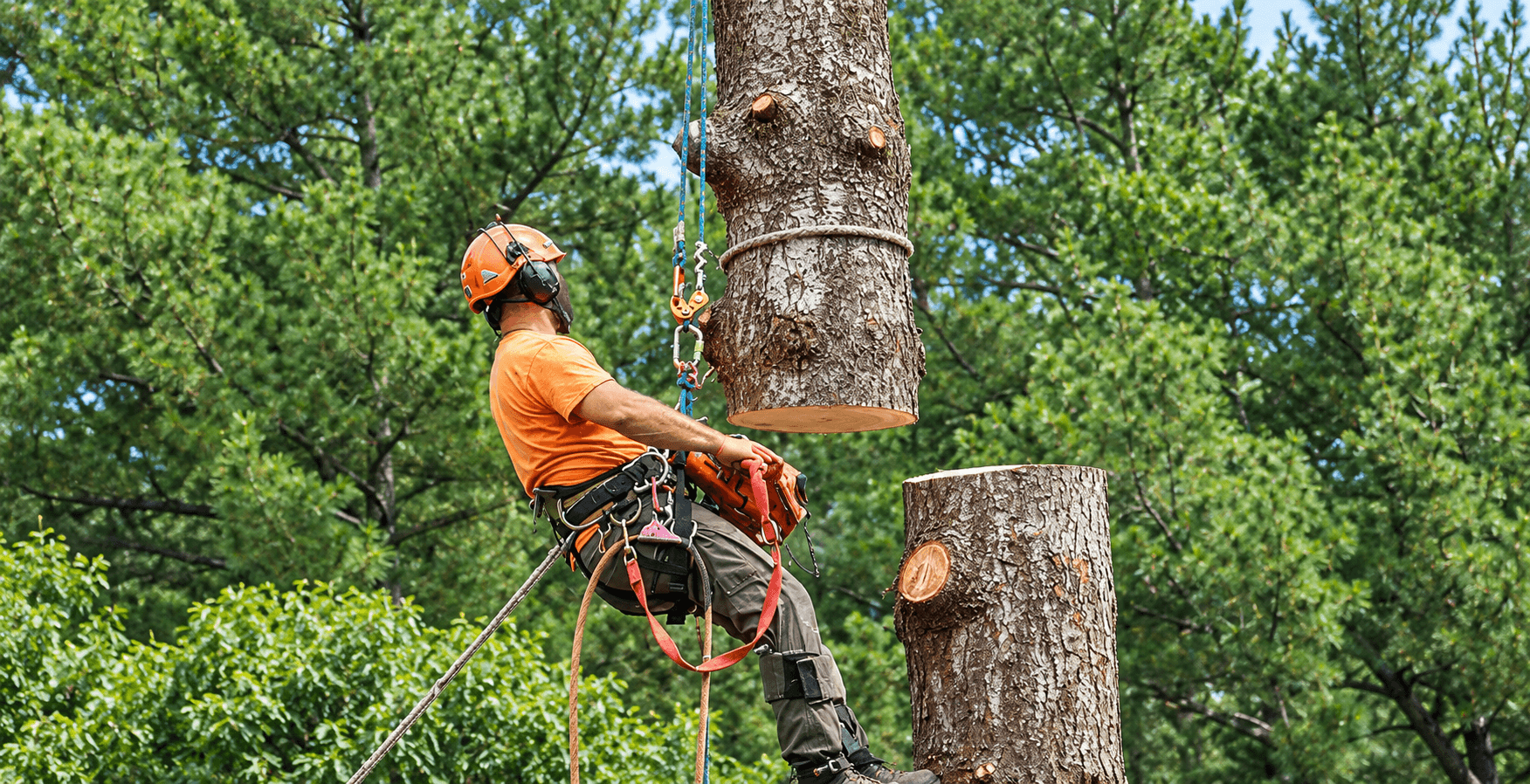
If tree removal is necessary, the arborist and removal team should plan how each tree section will fall or be lowered. Tree removal around buildings needs controlled rigging, appropriate equipment, and a protected work zone. Hazardous trees should never be treated like ordinary yard debris.
Frequently Asked Questions
The location and extent of the cavity, remaining sound wood, species, and nearby targets all matter. A professional should evaluate a hollow tree rather than assuming it is safe or automatically removing it.
A tree that has grown with a stable lean may be sound. A new lean, lifted roots, or fresh cracks is a tell-tale sign of movement and requires prompt attention.
Not usually when the trunk, roots, and remaining canopy are healthy. Proper pruning can often remove deadwood. Widespread dieback combined with root or trunk defects is more concerning.
Small ground-level work may be manageable, but large trees, heavy limbs, damaged trunks, and work near structures or utilities should be left to trained professionals.